
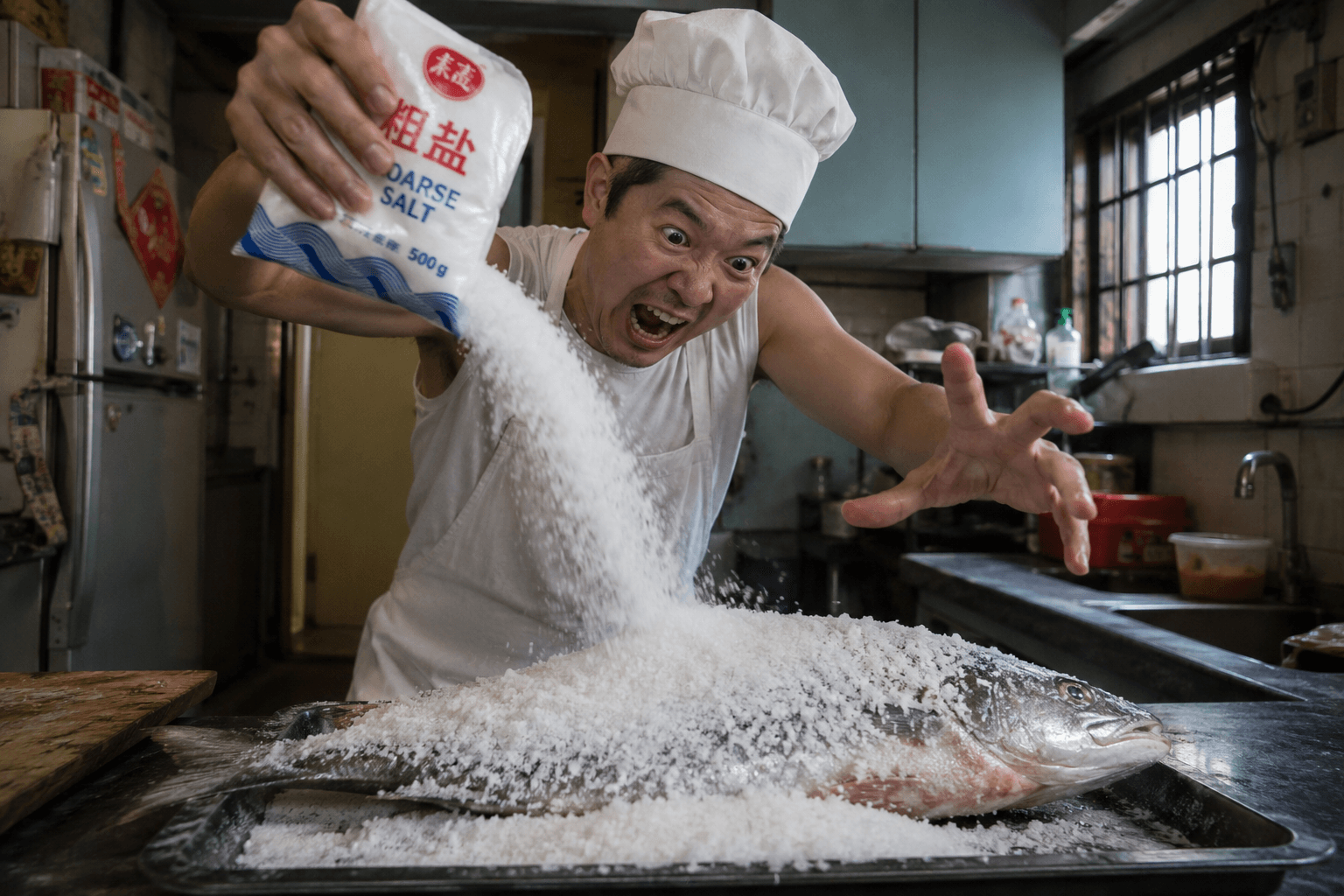
SINGAPORE — As electricity tariffs continue their relentless climb, Singaporeans have reportedly abandoned modern refrigeration altogether, embracing the ancient art of salt-curing food in what experts are calling "the nation's most dramatic technological regression since pagers."
Supermarkets across the island were stripped of table salt within hours after residents concluded that preserving fish the medieval way was now more economically viable than running a refrigerator.
"We did the maths," said Bukit Batok resident Ronald Goh, carefully burying an entire pomfret beneath what appeared to be half a kilogram of coarse sea salt. "Keeping the fridge on 24 hours costs money. Salt just sits there quietly and doesn't even need Wi-Fi."
Across HDB estates, bamboo poles that once held laundry have reportedly begun supporting rows of drying fish, slabs of pork, ducks, squid and what one resident admitted was "probably still chicken, but we'll know in about three weeks."
The sudden revival of traditional preservation methods has also inspired a new generation of culinary innovation.
Several hawker stalls have already begun advertising Salted Vegetable with Salted Fish Soup, a dish consisting primarily of salted vegetables, salted fish, salted broth and "a pinch of salt, just to bring out the flavours."
"It has incredible depth," said one chef. "Every spoonful reminds you of the sea, hypertension, and your electricity bill."
Nutritionists have expressed mild concern.
"We would normally advise reducing sodium intake," said one dietitian. "Unfortunately, the alternative appears to be eating spoiled fish."
FairPrice outlets have reportedly imposed purchase limits after several customers attempted to wheel entire pallets of salt to their cars.
One cashier said she had overheard a customer asking whether Himalayan pink salt could preserve salmon "because if I'm going bankrupt, at least let it be aesthetic."
Meanwhile, hardware stores reported brisk sales of ceramic jars after Singaporeans learned that refrigeration was once achieved without compressors, smart sensors or inverter technology.
"I always thought those giant jars were decorative," admitted one first-time buyer while filling his bomb shelter with fermented cabbage.
Government agencies sought to reassure the public that refrigerators remained the preferred method of food storage.
However, officials admitted they had noticed an unusual increase in Google searches for "How long can chicken survive under salt?", "Can I preserve bubble tea?" and "Difference between curing meat and making jerky accidentally."
At press time, one entrepreneurial café had unveiled Singapore's first Artisanal Heritage Charcuterie Experience, serving century-old preservation techniques to customers for $38 per plate, describing it as "a celebration of sustainable ancestral dining."