
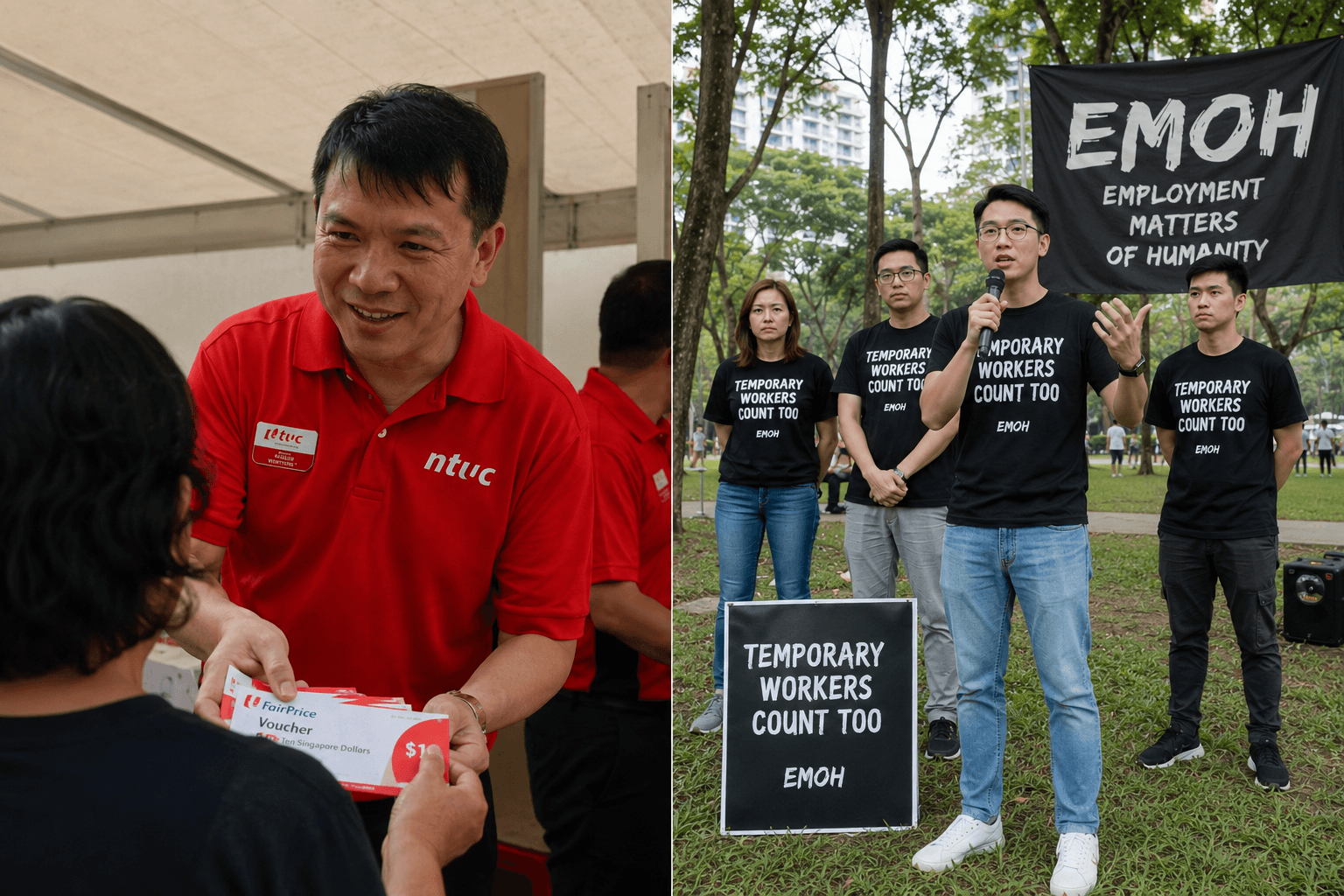
SINGAPORE — In a stunning demonstration of two entirely different approaches to problem-solving, NTUC this week helped hundreds of workers affected by unpaid salaries find replacement jobs, while several advocacy groups successfully raised awareness that the workers were, in fact, having a very difficult time.
The development followed the collapse of an air-conditioning company that left hundreds of employees facing salary issues and uncertainty over their future employment.
According to reports, about 40 companies stepped forward to offer jobs to around 400 affected workers through a recruitment exercise organised with NTUC's assistance.
Meanwhile, advocacy groups also sprang into action, releasing statements, conducting interviews, posting updates on social media, and helping the public understand that not receiving one's salary is generally considered undesirable.
"Workers need support," said one activist while standing in front of a banner reading Temporary Workers Count Too. "It is important that Singaporeans understand the emotional, social, psychological, philosophical, existential and possibly spiritual implications of not being paid."
Observers noted that the advocacy effort proved highly successful, with public awareness of the crisis increasing dramatically from "people vaguely heard about it" to "people definitely heard about it."
The workers themselves appeared appreciative of both efforts.
"One group helped me find a job," said former technician Mr Ahmad Salleh. "The other helped me find several new ways to describe my feelings about not having a job."
Sources said several workers left the event carrying both employment offers and a much deeper understanding of structural labour dynamics.
Labour experts explained that both approaches play important roles in society.
"One side addresses immediate needs," said sociologist Dr Lim Boon Huat. "The other side ensures that when future generations study the incident, there will be no shortage of detailed commentary."
At the recruitment fair, job seekers were reportedly being interviewed on the spot, with some receiving offers within hours.
Across town, activists were reportedly preparing a comprehensive 72-page document explaining why it would have been preferable if workers had never lost their salaries in the first place.
The report's executive summary consisted entirely of the sentence: 'This situation is not ideal.'
By press time, NTUC had announced that additional employers were still coming forward to hire affected workers, while advocacy groups had announced a follow-up forum titled "Beyond Employment: Reimagining The Concept Of Having A Job."